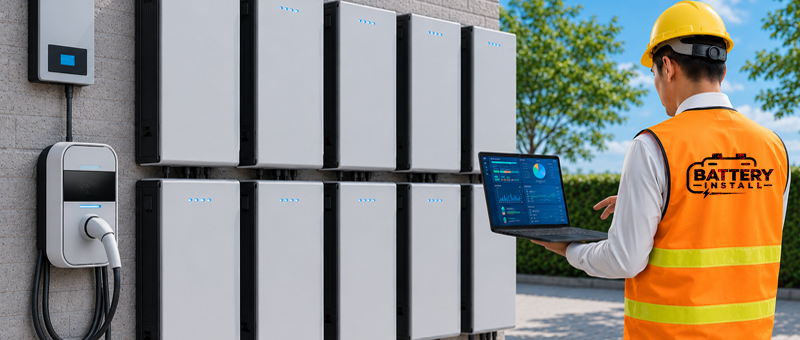
Battery compatibility is determined by the complete system—not just the logo on the inverter. Our assessment identifies the equipment already installed and the practical routes for adding storage or increasing existing capacity.
batteryinstall.ie / compatibility
Can your solar take a battery?
Nearly always yes — the real question is which route. Four questions and we'll tell you whether you're an AC-coupled retrofit, a hybrid changeover, or already halfway there.
Step 1 What's on the wall
Step 2 Inverter brand
It's the box near your consumer unit, usually in the attic, garage or utility. Brand is on the front.
Step 3 Type and age
A hybrid is battery-ready out of the box. If the model name ends in something like "-H", "Hybrid", "ES", "SPH" or "Gen24", it probably is.
Step 4 What you want from it
This changes the design, so it's worth deciding now rather than later.
Nobody knows their model number. Everybody can photograph a sticker — it's the single most useful thing you can send us.
Recommended route Pending
—
Answer the questions on the left and the recommendation appears here.
ESB Networks
—
Whether the change needs notifying.
Existing warranty
—
Effect on cover you already have.
What happens next
We'll list the exact steps once we know what you've got.
What We Review
Inverter make, exact model and serial number
Whether the inverter is string-only, hybrid or part of a microinverter system
Existing panel string voltage and power
Battery make, model, generation and age where fitted
BMS and firmware requirements
Electricity meter and consumer-unit arrangement
Existing CT clamps, smart meters and monitoring devices
Proposed installation location and cable route
Internet connectivity and app access
Energy consumption, export and tariff information
Information to Send Us
A clear photograph of the front of the inverter
A clear photograph of the inverter model label
Photographs of the existing battery and its label, if fitted
A photograph of the electricity meter
A photograph of the consumer unit or distribution board
A screenshot from the monitoring app
A recent electricity bill
The proposed battery location
A short description of what you want the battery to achieve
What You Receive
We will outline the likely compatible route, any further checks required, whether an inverter upgrade is necessary, and the battery capacity that appears most appropriate. A final installation proposal may require a site survey.
Important
A remote compatibility review is based on the information supplied. Final compatibility and installation requirements are confirmed through technical checks and, where necessary, an on-site assessment.
Start your compatibility check
You do not need to know the technical details. Clear photographs normally give us a useful starting point.