
How Much Does a Solar Battery Cost in Ireland?
Clear, honest guidance on solar battery prices, installation costs and potential savings in Ireland.
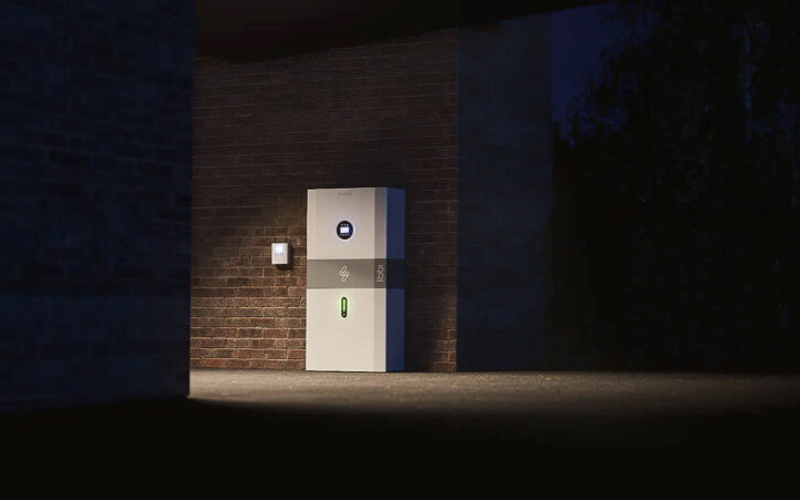
Solar Battery Cost in Ireland — Prices, Payback and What Drives the Number
A retrofit battery on an existing solar system in Ireland typically costs €X,XXX to €XX,XXX fitted, depending on capacity, whether the inverter needs replacing, and whether you want backup during power cuts.
There is no SEAI grant for battery storage, so that figure is what you pay. Below is what sits inside it, and what makes it move.
batteryinstall.ie / indicative quote
What will it cost?
An itemised indicative figure, not a headline number with things quietly left out. Everything below is priced separately so you can see what each part of the job costs — including the bits other quotes bury.
The job
Hardware
Site and extras
Indicative total Retrofit
A range, not a single number, because the survey moves it. What it will not do is grow after you sign.
We'll confirm on survey. Nothing arrives later as an extra.
What's included and what isn't
VAT: rates differ between a battery installed as part of a solar job and one retrofitted later. We'll state the applicable treatment on the written quote rather than guessing here.
| Component | Typical share | Notes |
|---|---|---|
| Battery modules | [ 45–60% ] | Scales with kWh; cost per kWh falls as capacity rises |
| Inverter or battery inverter | [ 15–25% ] | Zero if your existing hybrid is compatible |
| Installation labour | [ 10–20% ] | Two people, half a day to two days |
| Electrical works | [ 5–15% ] | Isolators, protection, cabling, sometimes a board change |
| Backup gateway | [ optional ] | Only if you want power during outages |
| Certification and notification | [ small ] | IS 10101 cert, ESB Networks paperwork |
| VAT at 23% | applied to the total | Standard rate — battery retrofits are not zero-rated |
What this means in practice:
| Scenario | VAT treatment |
|---|---|
| Solar panels supplied and installed, private dwelling | 0% |
| Battery retrofitted later, on its own | 23% |
| Battery plus replacement hybrid inverter, no new panels | 23% |
| Battery bought and installed as part of a new solar installation | Treated with the panel installation — worth asking about if you’re doing both |
| Commercial or farm installation, VAT-registered business | 23% charged, and normally reclaimable — see below |

If you see a quote at 13.5%, ask why.
If you see a quote with no VAT line at all
ask whether the installer is VAT-registered. An unregistered sole trader below the threshold genuinely cannot charge it — but they also cannot reclaim it, and you should think about what that tells you regarding the scale of the operation standing behind a ten-year warranty.

Businesses and farms:
we quote commercial work exclusive of VAT. A VAT-registered business can normally reclaim the 23% in the usual way, so the effective cost is the ex-VAT figure. Confirm with your own accountant — treatment depends on your registration status and the use of the asset.
All residential prices on this site and in our quotations are stated exclusive of VAT at 23%.
What makes a quote go up
Backup / EPS
Three-phase
Awkward siting
Consumer unit condition
Outdoor installation.
What makes it come down
- An existing compatible hybrid inverter
- A tidy modern consumer unit with spare ways
- Battery sited close to the inverter and the board
- Standard single-phase supply
- No backup requirement
- Buying capacity once rather than expanding twice
Battery Payback & ROI
Payback depends almost entirely on the spread between what you’d pay to import and what you’d get to export, and on how many times a year the battery cycles.
As of August 2026, the Irish picture looks like this:
| Rate | |
|---|---|
| Standard day/flat import | ~30–35c/kWh |
| Smart tariff evening peak | up to ~48c/kWh |
| Standard smart night rate | ~10–18c/kWh |
| EV “boost” windows (roughly 2am–6am) | ~6–12c/kWh |
| Clean Export Guarantee | ~18.5–19.5c/kWh with most suppliers |
Rates verified August 2026 and subject to change — check current supplier tariffs before relying on any figure.
Two things follow from the table information.
Dynamic Tariffs
The CRU has required the five major suppliers to offer dynamic, half-hourly-priced tariffs from June 2026. Dynamic pricing rewards exactly what a battery does buy when wholesale prices collapse on a windy night, avoid buying when they spike at six on a cold Tuesday.
A battery bought today is likely to earn more under dynamic tariffs than under the tariff you are on now, which is a genuine argument for installing rather than waiting. It is not, however, an argument we’ll put a number on until the tariffs are actually live and we’ve seen a year of data.
What we don’t do
We don’t quote a payback figure without your consumption data, and we’d be sceptical of anyone who does. The two numbers that decide it a) your evening consumption and b) Your current tariff are specific to you, and the difference between a good case and a poor one is several years.
We also do not quote fixed savings on a website. Run the calculator with your own figures, or send us a recent bill and your HDF file and we’ll model it properly.
Frequently Asked Questions
How much is a solar battery in Ireland?
[ €X,XXX–€XX,XXX ] fitted for a typical residential retrofit, with capacity and whether the inverter needs replacing being the two biggest variables.
Is there a grant for battery storage in Ireland?
No. The SEAI Solar PV grant covers panels only. No grant, at any level, applies to battery storage — for a new install or a retrofit.
How long does a solar battery take to pay for itself?
Typically [ X–XX years ] depending on tariff, consumption and cycling. Households on time-of-use tariffs with high evening consumption sit at the fast end; low-usage households on flat rates sit at the slow end, and some shouldn’t buy one at all.
How long does a battery last?
Modern LFP batteries are warranted for 10 years or a stated throughput, typically retaining 70–80% of original capacity at end of warranty. Real-world life is generally longer than the warranty. Ask what the warranty actually guarantees — capacity retention, cycles, or years — because the three are not the same.
Does a battery reduce my Clean Export Guarantee payment?
Yes, and that’s the point. You export less because you’re using more of your own generation. Since you save 30c+ by using it and earn about 19c by exporting it, the trade is strongly in your favour.