
Use Cheap Electricity
When You Want.
Not Just When It’s Available.
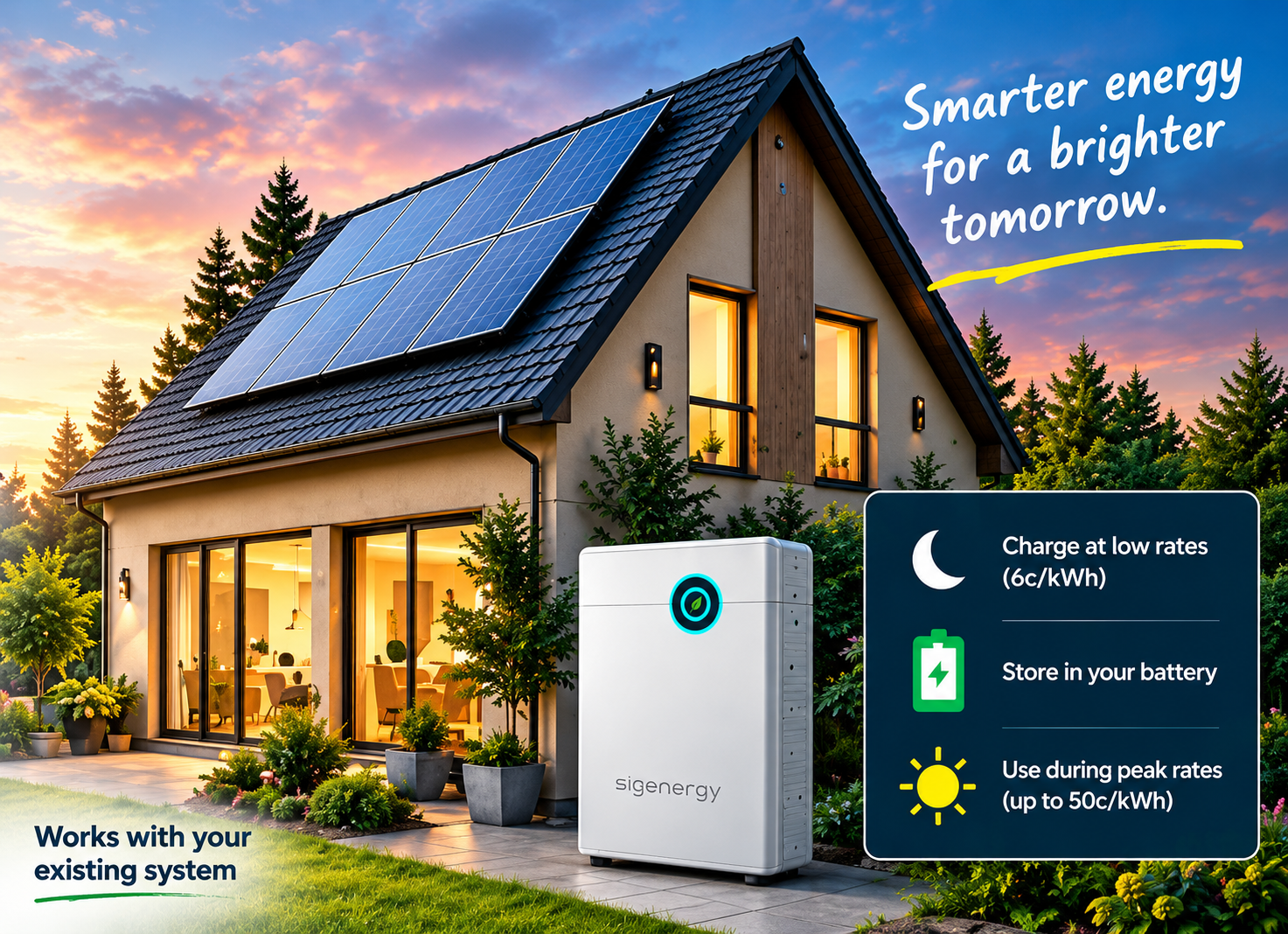
Replace an old, faulty or undersized battery. Upgrade to more storage, better performance and modern features — designed around how you use electricity today.
Lower electricity bills
Make more of renewable energy
Works with your existing system
Smart Electricity Tariffs and Solar Batteries
Last updated: 5 September 2026
See how the main electricity suppliers compare and find the tariff structure that may suit your battery.
| Supplier | Tariff | Cheapest Rate | Cheap Period | Day Rate | Peak Rate | Export Rate |
|---|---|---|---|---|---|---|
| Electric Ireland | Smart Saver | Current rate | Current hours | Current rate | Current rate | Current rate |
| Bord Gáis Energy | Smart EV | Current rate | Current hours | Current rate | Current rate | Current rate |
| SSE Airtricity | Smart Home | Current rate | Current hours | Current rate | Current rate | Current rate |
| Energia | Smart Time-of-Use | Current rate | Current hours | Current rate | Current rate | Current rate |
| Pinergy | Dynamic | Dynamic | Varies (30 min) | Varies | Varies | Current rate |
| Flogas | Dynamic | Dynamic | Varies (30 min) | Varies | Varies | Current rate |
Look at the cheap rate, charging window, day rate, peak rate, export payment and your battery size. The tariff and battery configuration need to work together.
Dynamic Electricity Tariffs
Unlike a conventional smart tariff with fixed day, night and peak periods, a dynamic tariff can have a different price for each 30-minute period of the day.
The following day’s prices are published in advance, creating the opportunity to buy electricity at lower-priced periods and avoid the grid when prices rise.
Why a Battery Makes Smart Tariffs More Powerful
Instead of changing when you use electricity, you can change when you buy it.
Charge when it's cheap
Keep it in your battery
Power your home when it's expensive
Buy electricity when it’s cheap. Use it when it’s expensive.
Smart Batteries Are Getting Smarter
Modern platforms such as Sigenergy and Tesla use increasingly sophisticated energy-management tools. Depending on the system, they can consider household consumption, expected solar generation, weather forecasts and tariff information.
- Learn your energy usage
- Use weather and solar forecasts
- Work with smart and dynamic tariffs
- Optimise charging and discharging automatically

Solar, Battery & Tariffs Work Together
Surplus solar can be stored for later or exported to the grid. If your export payment is attractive while overnight import is very cheap, there may be circumstances where exporting solar and charging later from the grid makes financial sense.
- Maximise solar generation
- Consider export payments
- Reduce expensive grid imports
- Adapt the strategy through the year

Your Battery Strategy Changes Through the Year
The best battery configuration isn’t necessarily the same all year.
EVs, Heat Pumps & Smart Tariffs
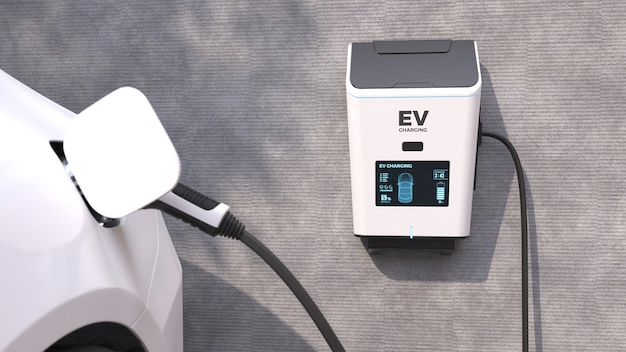
Smart tariffs become even more useful where a home has larger electrical loads. Cheap periods may potentially be used for both EV charging and battery charging, while a battery can help reduce expensive daytime imports for a heat-pump home.
- EV charging at low-cost periods
- Support your heat pump
- One integrated energy strategy
- Consider available electrical capacity
Fixed Smart Tariff or Dynamic Tariff?
There isn’t one answer for every household.
Fixed Smart Tariff
- Predictable pricing periods
- Easier to configure
- Good for households that value certainty
Dynamic Tariff
- Prices can change every 30 minutes
- Potentially greater optimisation opportunity
- More complex and more variable
Dynamic Tariff + Intelligent Battery
A compatible battery can potentially use pricing, expected consumption and solar forecasts to determine a better strategy for each day.
Is Your Battery Actually Optimised?
A battery can appear to be working perfectly while still costing you money unnecessarily.
- Charging during expensive periods
- Discharging while electricity is cheap
- Empty before the evening peak
- Using old tariff settings
- Filling completely overnight before a sunny day
- Not charging enough in winter
- Not considering export payments
Battery Energy Optimisation Service
Get more from the battery you already own. We can review your tariff, battery, solar, export rate, electricity use and major electrical loads to determine whether your current setup can be improved.
What We Review
- Your electricity tariff
- Your battery capacity and operating modes
- Your solar generation
- Your export rate
- Your electricity usage
- Your EV or heat pump
Battery Platforms
We can assess compatible systems from manufacturers including Sigenergy, Tesla, Huawei, FoxESS, Solis, GivEnergy, Sungrow, Growatt, myenergi libbi and other residential battery platforms.
Available optimisation functions vary by manufacturer, model, software version, tariff and system configuration.
Frequently Asked Questions
What is the best smart tariff for a solar battery?
There isn't one tariff that's best for everyone. The right choice depends on your electricity use, battery capacity, solar generation, cheap-rate period, peak rate, export payment and other loads such as an EV or heat pump.
What is a dynamic electricity tariff?
Is a dynamic tariff better for a battery?
Potentially. A battery can store electricity during cheaper periods and use it during more expensive periods, but dynamic pricing is more variable and suitability depends on the home and battery-management capability.
Can AI control my solar battery?
Some modern platforms provide AI or predictive energy-management features. Functionality varies considerably between products and configurations.
Does Sigenergy use AI?
Sigenergy offers AI-based energy-management features designed to use information such as household demand, solar forecasts, weather and tariff data when optimising system operation.
Does Tesla Powerwall learn my electricity usage?
Tesla's energy-management features can forecast household consumption and solar generation and use tariff information when deciding how Powerwall should operate.
Should I charge my battery every night?
Not necessarily. It depends on your tariff, season, expected solar generation and household demand.
Should I completely fill my battery overnight?
Not always. On a sunny day, filling the battery overnight could leave insufficient capacity for surplus solar generation.
Can I charge my battery on an EV tariff?
Many systems can be scheduled to grid-charge during lower-cost EV tariff periods, subject to equipment capability, settings and available electrical capacity.
Is the tariff with the cheapest night rate always best?
No. The charging window, daytime rate, peak rate, export payment and your battery's usable capacity all matter.
What happens if I change electricity supplier?
Your battery settings should be reviewed because the cheap and expensive periods on the new tariff may be different.
Can you optimise a battery you didn't install?
Potentially, yes. We first need to identify the battery, inverter and available access to the system.