
Find the Right Solar Battery Size for Your Home, Energy Use & Solar System.
What Size Solar Battery Do I Need?
(Ireland Sizing Calculator)
Most Irish homes land somewhere between 5 kWh and 15 kWh of usable capacity. Where you sit in that range depends on three things: how much surplus solar you actually export, how much electricity you use between four in the afternoon and midnight, and whether you’re on a time-of-use tariff that lets the battery charge cheaply from the grid.
That last one changes the answer more than anything else. On a flat rate, a battery can only ever store what your panels give it. On a night-rate tariff, it can fill every night regardless of the weather — and the correct size goes up, sometimes substantially.
batteryinstall.ie / sizing tool
How big a battery do you actually need?
Sizing isn't about your roof. It's about how much electricity you use after the sun goes down, and whether you're on a tariff that lets you buy cheap overnight. Answer six questions and we'll show you the range that fits — and where it fills from.
Your house 1 of 2
Your loads 2 of 2
Recommended size Solar + night rate
Enough to carry your evening and overnight use without importing at peak rate.
Inverter power
5.0 kW
How much the battery can deliver at once — a separate question to capacity. 5 kW is what we fit as standard.
Covers
~92%
of a typical evening and overnight draw.
Indicative sizing. No obligation, no sales call unless you ask for one.
A typical day June
Reading this: bar height is how full the battery is at that hour.
How the sizing model works
We would rather show our working model than ask you to trust a number.
If you have your ESB Networks HDF file, upload it.
Half-hourly data from your smart meter overrides every assumption above with your actual consumption, half hour by half hour, for the last two years. You can download it free from the ESB Networks customer portal. It takes the sizing from an estimate to a measurement.
Our Position:
EV charging.
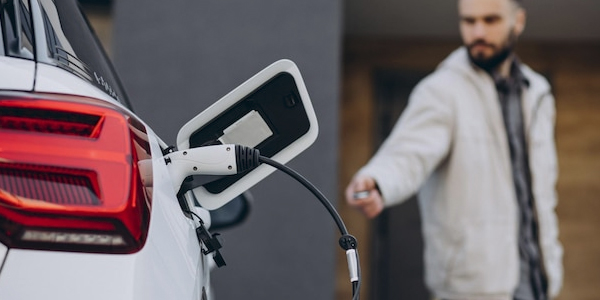
We deliberately leave EV charging out of battery sizing. Charging a car from a house battery is a round trip through two sets of conversion losses to move electricity you could have bought at 6–10c on a night rate anyway.
Charge the car directly on the cheap window; size the battery for the house. Anyone selling you a bigger battery on the basis of EV charging is selling you capacity you won’t earn back.
Heat pumps
Typical sizing outcomes in Ireland
| Household | Annual use | Tariff | Typical usable capacity |
|---|---|---|---|
| Two adults, no EV, flat rate | ~3,500 kWh | Flat | 5–8 kWh |
| Family of four, gas heating | ~4,500 kWh | Smart 3-band | 8–12 kWh |
| Family of four, heat pump | ~7,000 kWh | Smart with night boost | 12–18 kWh |
| Family, heat pump + EV, night rate | ~9,000 kWh+ | EV tariff | 15–20 kWh |
| Rural home, immersion + oil backup | ~5,000 kWh | Day/night | 10–14 kWh |
Why bigger isn’t automatically better
A battery earns money by cycling. Every full charge-and-discharge displaces expensive grid electricity with cheap or free electricity. A battery that cycles 300 times a year earns roughly twice what the same battery earns cycling 150 times.
So oversizing does something counter-intuitive: it *reduces* cycles. The extra capacity never fills in winter and never empties in summer, and you’ve paid for kWh that sit at 50% state of charge doing nothing. The payback period gets longer, not shorter.
The exception is a genuinely large, shiftable load — heat pump, immersion, workshop that can absorb the extra capacity on a winter evening. If you have one, size up. If you don’t, don’t let anyone talk you into it.
The other exception is planned change. If a heat pump or an extension is coming in the next two years, it’s usually cheaper to buy the capacity once than to expand later, expansion depends on the manufacturer still supporting your model and generation, and that’s not guaranteed.